FPV-SLAM is #1 on LaMAria mono-inertial
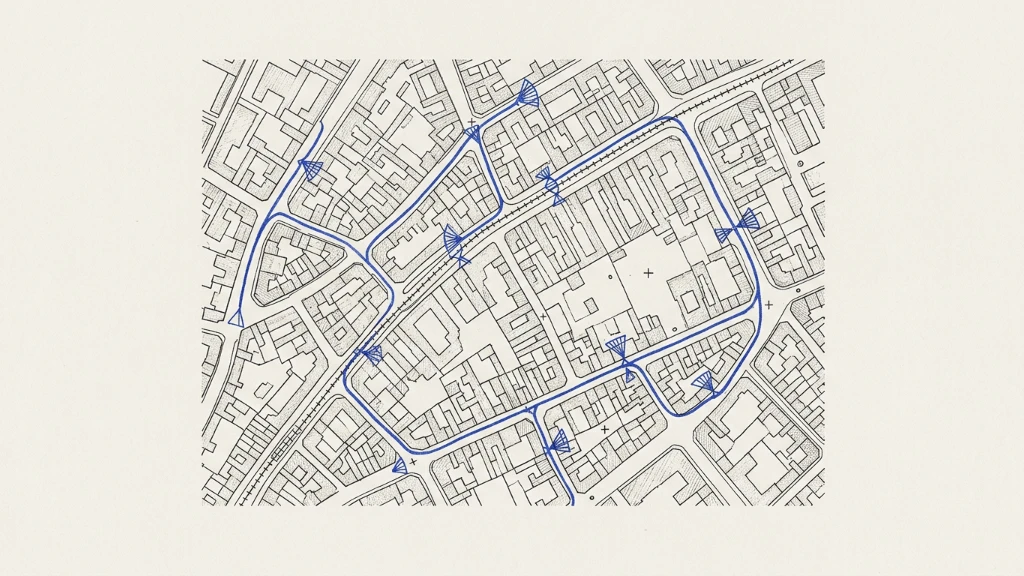
FPV-SLAM ranks first on the monocular-inertial track of LaMAria and leads all five categories. It ranks third on the binocular-inertial track, behind Aria's SLAM and Grounded SLAM. It is open for early access.
Why SLAM is the core
Egocentric video becomes training data only when the camera pose is known at every frame. Hand tracking, 3D reconstruction, trajectory extraction and transfer to robots all hang from it. Millimetre-accurate hand labels are useless if the head pose they sit on is off by centimetres.
Where SLAM breaks
Most SLAM systems were built for cars, drones and handheld rigs, where motion is smooth and the camera looks ahead. Head-mounted capture breaks those assumptions:
- Fast head turns move features across most of the image in a few frames.
- Motion blur, low light and blown highlights between rooms.
- People, reflections and vehicles pulling the estimate.
- Little parallax when someone sits and works at a table.
- Hands covering the view at arm's length.
- Drift over minutes and kilometres with one camera.
On LaMAria's monocular-inertial track, ORB-SLAM3 averages 10.0 out of 100 and OpenVINS averages 7.8.
The benchmark
LaMAria was recorded on Project Aria glasses: 63 test walks from a few hundred metres to several kilometres, day and night, on foot and on trams and buses, across five categories (Short, Medium, Long, Low light, Moving platform). Ground truth is a set of surveyed control points hidden from participants. Each walk is aligned with one similarity transform, and horizontal error converts to points: 5 cm earns 100, 1 m earns 60, 5 m earns 20, 10 m or more earns nothing.
What we built
One pipeline that runs monocular or binocular, each with IMU, in three parts:
- Odometry for head-mounted video. Patch-based optical flow with contrast normalisation, pyramid tracking for fast turns, IMU pre-integration solved jointly in a fixed-lag window, and outlier rejection with a robust loss after every solve.
- Per-session calibration. Camera parameters optimised against each recording, with no target and no special motion.
- Keyframe visual-inertial bundle adjustment. Global refinement over the whole walk with long-range matching and loop closure, which keeps the trajectory at metric scale.
Results
Short-walk score: 61.4, against 57.1 for the next entry. FPV-SLAM stays ahead however the board is sorted, and beats the best score any other entry posted in each category.
On the binocular-inertial track FPV-SLAM ranks third with 77.3 on short sequences, behind Aria's own SLAM and Grounded SLAM.
Limitations
Moving platforms remain hard: 25.8 mono and 29.6 bino. An estimator tuned for walking cannot fully separate a tram's motion from the wearer's. Without a loop closure, drift on long single-camera walks can be delayed but not removed. FPV-SLAM runs offline: the odometry alone runs well above real time, and the full pipeline with refinement runs at about 10 frames per second on a 16-core cloud machine.